
Cartagena. Historic city near the sea.
The next day we decided to visit the city of Cartagena. An ancient Roman port city. A special city with a gigantic history where you soon find yourself short of hours to learn about it.
In short summary:
- Cartagena was founded in the year 227 BC on the site of an ancient Iberian or Tartessian settlement. Under the name of Qart Hadasht (New Town). The city experienced its heyday under Roman rule under the name Carthago Nova. Later the city fell under the rule of Byzantine domains and was subsequently largely destroyed by the Visigoths. From the 16th century, however, the city experienced growth again due to a major military role that the city could play.


My parents-in-law and my husband decided they would rather take it easy on a terrace. So I went alone. Searching for old historical places. There are various remains from Roman times to be found. The most special is the theater built by order of Emperor Augustus. Through a museum located on the square Pl. Héroes de Cavite (where you can also admire a remnant of an old harbor wall (in its original location). In the museum you can admire various archaeological artifacts and works of art of the Romans. The details in, for example, old wall paintings continue to amaze me every time.
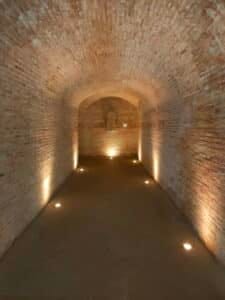
After the main building, you move through a very old corridor (presumably dating from the 13th century) to the original Roman Amphitheatre. The local government, in collaboration with various international universities, is still busy with archaeological research and restoration work on and around the Amphitheatre. Can't say anything else but it's worth a visit. Especially for the very small entrance fee.
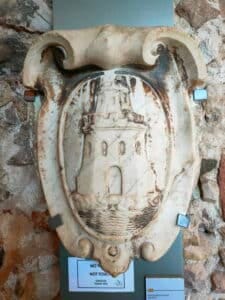
Next to the Amphitheater is the Castillo de la Concepción. A castle whose base dates from about the 13th century. After the conquest of Cartagena by Alfonso, son of King Ferdinand III of Castile in 1245, the Diocese of Cartagena was restored in 1250. Following this, the Order of Santa Maria de España was founded in 1270 for the defense of the sea for the Crown of Castile. This Order is still active to this day and the knighting of members is still done in the castle.
The walk up is also worth it. It gives a panoramic view of almost all of Cartagena.

However, Spain has also experienced a turbulent period more recently. During the outbreak of the Spanish Civil War from 1936 to 1939, the city was hit hard by many attacks. Both from land and sea, but also from the air. For example, various human-created cave systems can be found in the city that functioned as shelters for the inhabitants of the city. One of them is located under the castle of the Order of Santa Maria and can be visited. It shows how people lived or survived in the caves.
Could have spent many hours in this city. There are various defense works from the 16th and 17th centuries, among others. From castles to defensive walls to fortifications with extensive chained batteries. It is advisable to put on a good pair of walking shoes and to bring plenty of water. Several of these defenses are situated on the natural rock formations in the immediate vicinity and therefore require a bit of walking to the top.
 EN
EN  NL
NL