
Here I always try to advise making the right investments. A poor sleep system can change your entire camping experience into a kind of “hell”.
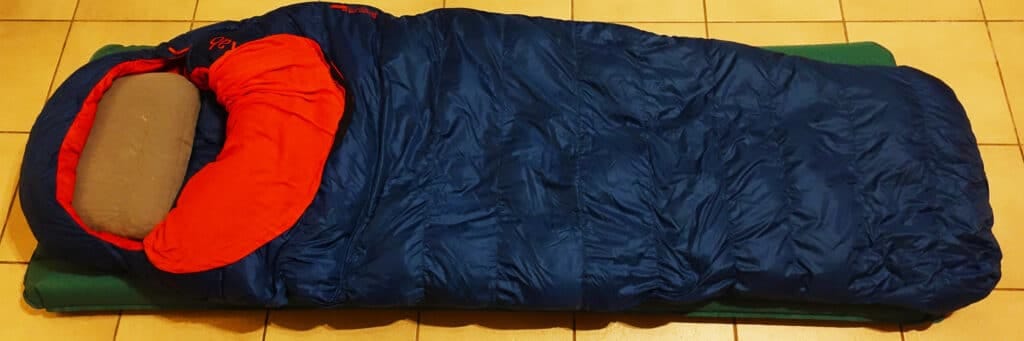
Sleeping pad
Start with the right sleeping pad. The most important factor here is mainly the insulation value. My advice is to choose a minimum insulation value of 5R. Sleeping pads from 1R to 4R are predominantly only suitable in the summer. With 5R, you usually have sufficient insulation for cold spring and autumn nights. Most of the cold comes through the ground, the sleeping pad, and then straight through your sleeping bag to your body. When you have a well-insulated sleeping pad, this already greatly reduces the cold during sleep.
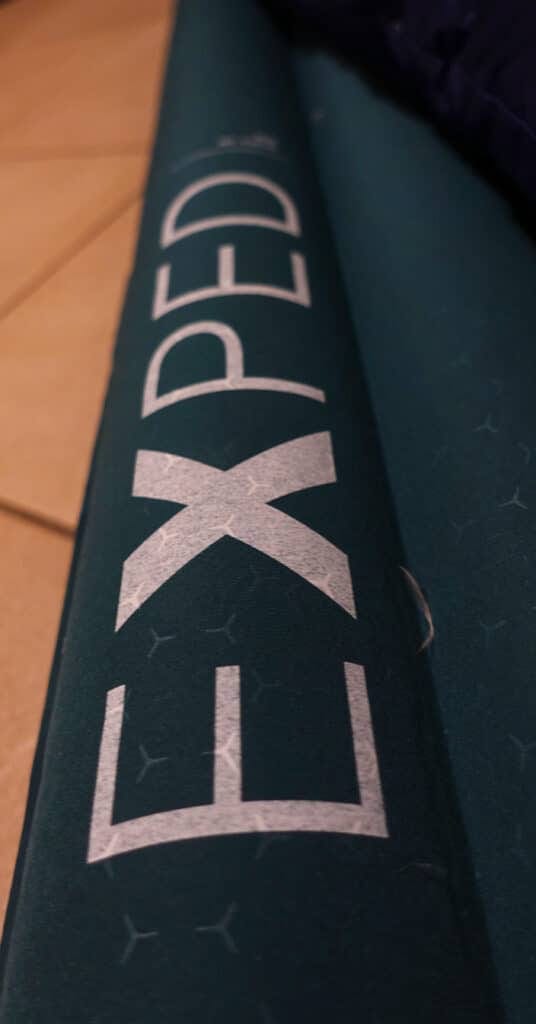
- I chose the Exped Dura 5R Medium Wide. The wide is a slightly wider sleeping pad, which offers a bit more comfort but doesn’t really take up much more space.
Sleeping bag
Sleeping bags generally have two different types of filling. Synthetic filling and a down filling. Both have their pros and cons. For both, when you choose a sleeping bag, also pay attention to the comfort temperature rating. The limit temperature indicated on the sleeping bags is to help you survive in that temperature. Not to make you comfortable.
Synthetic filling stays in place a bit better in the compartments of the sleeping bag. This is why sleeping bags with synthetic filling often have wider panels between the stitching. This means you often have less trouble with cooler edges because there are fewer stitching seams. However, a disadvantage is the pack size. A sleeping bag with a comfort temperature up to 0 degrees Celsius already has a serious pack size and can therefore quickly fill a whole pannier/bag.
Down filling often has narrower panels between the stitching. This means you have cooler edges in the sleeping bag more quickly. The reason for this is that down does not stay in place as easily. However, an advantage of down sleeping bags is that they can be packed extremely small in a compression sack.
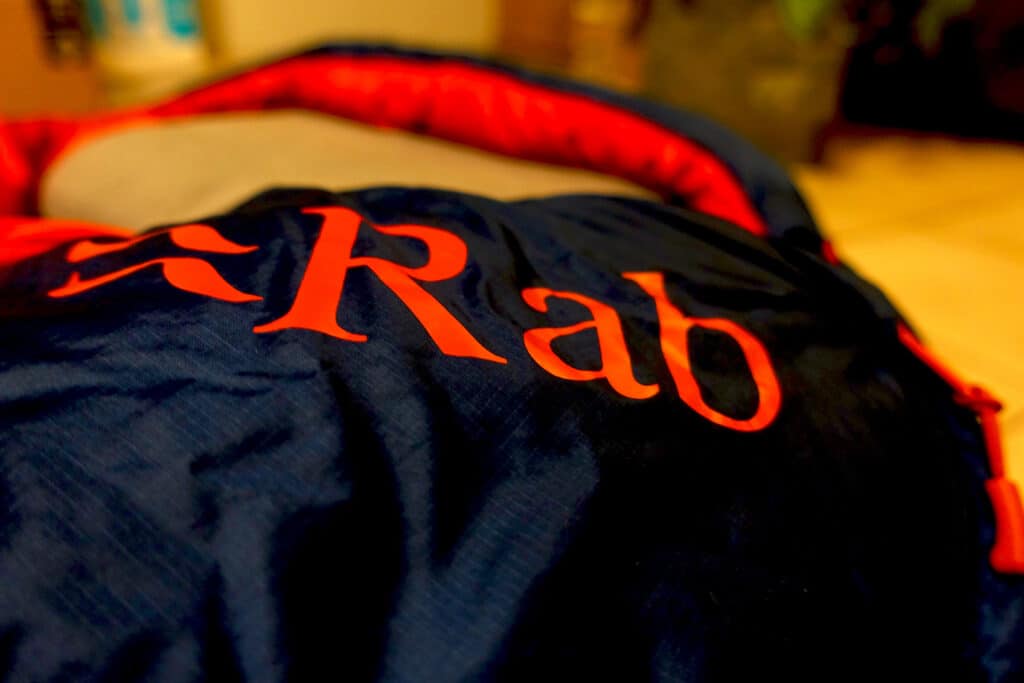
My choice ultimately fell on a down sleeping bag from RAB. The Ascent 700 Women. This one is slightly shorter than most sleeping bags (suitable for a body length of 170cm) and has a bit more room at the hips due to the average body shape of women. To reduce the burden on the sleeping bag from the body’s influences, I also have the Sea to Summit Liner Extreme in it. This absorbs a lot of moisture and odors, which can also be used separately in the summer. For example, during very warm nights. When traveling you can simply leave the liner in the sleeping bag and pack it into the compression sack (also one from Sea to Summit because RAB’s is not really a compression sack).
Pillow
Last but not least, it is important to have a pillow.
Some are satisfied with a rolled-up sweater as a pillow. Still, I can always recommend also thinking carefully about this. After all, it is part of whether or not you get a good night’s sleep. There are also so many different types an sizes available. From inflatable travel pillows for literally a few euro’s to down pillows with a serious price tag. It all depends on your sleeping habits (for example, whether you are a side or back sleeper), your budget, and preferences. Take your time to find something that fits your wishes.
My choice ultimately fell on the Cocoon Air Core Pillow Ultralight. Still packs very compactly, but the top lining provides a comfortable feeling. I can always find a place for this in my luggage.
Here the whole system packet compared to a 1 litre bottle:

 EN
EN  NL
NL