
Camping as a learning experience
Camping. Something I enjoy immensely, especially in recent years on my motorcycle. A feeling of freedom, peace, and health. It's also a learning experience. Developing techniques, resilience, and self-reflection. It has laid the foundation for my self-confidence.
The first leap of faith
I still remember how daunting it was to go out alone for the first time. All my gear on the back of my motorcycle. Not knowing what awaited me.
Practice makes perfect.
Over the years, my motorcycle camping setup has evolved. From tent to sleeping system to the cooking set I use. Every time I use it, I find new things to improve. Although it's gotten to the point where it's mostly a matter of refining.
Back to basics
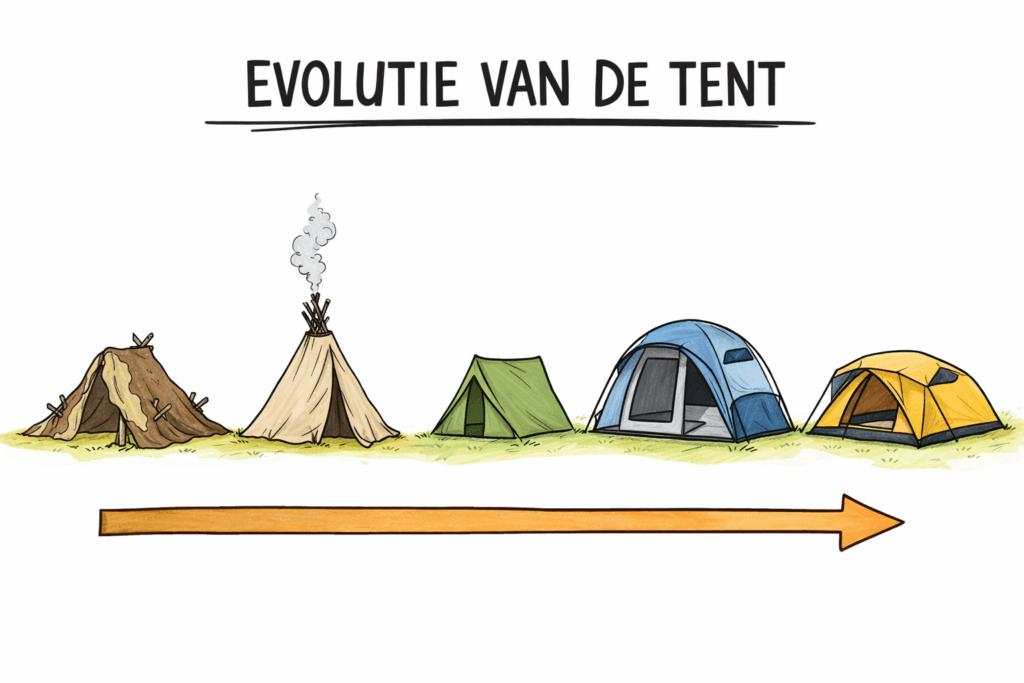
Let's start with the basics. The shelter. Or rather: the tent.
When "good enough" is no longer enough
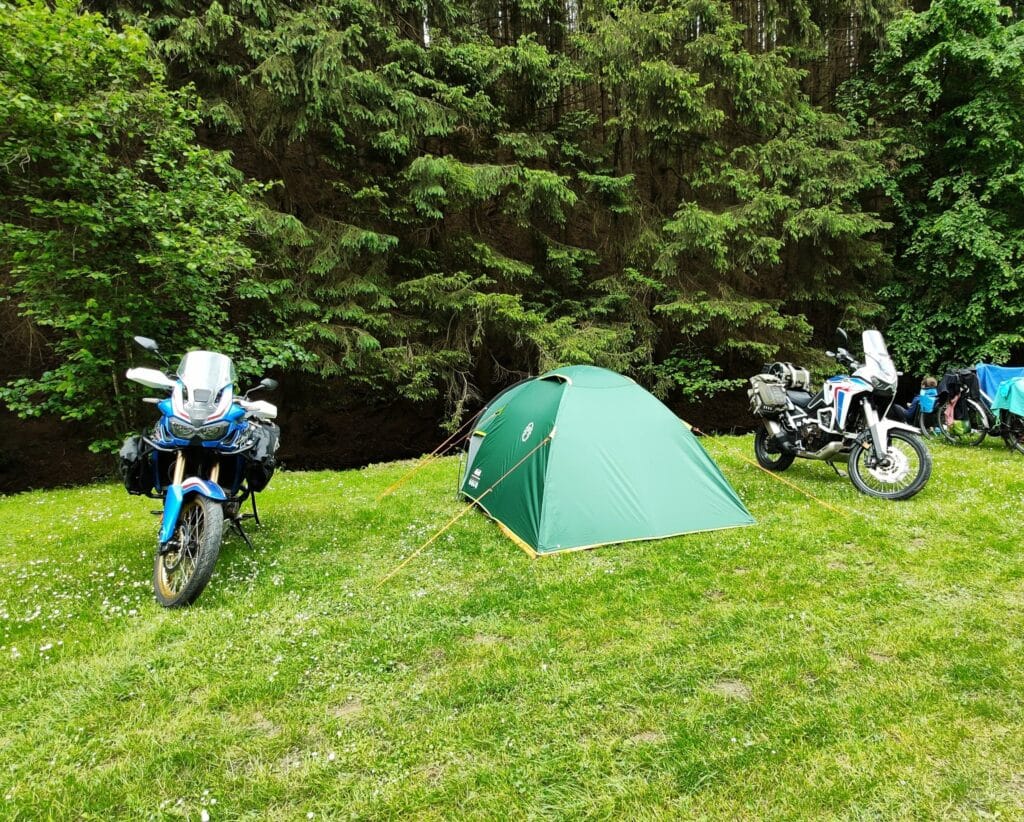
Last year, I decided to invest in a new tent. The Nordisk was fine, but I did have some challenges when the weather wasn't great. My freedom of movement was somewhat limited. Although I know some that look considerably more like a body bag than a tent, so maybe I didn't have much to complain about.
On an adventure together
When I went on a trip with my husband, we used the Coleman dome tent. Simple, spacious, and dark inside, which my husband especially loved. But this tent also had its drawbacks. The quality wasn't very high, which was understandable given the average price. It packed bigger and was also heavier to carry.
The search for one tent that does it all
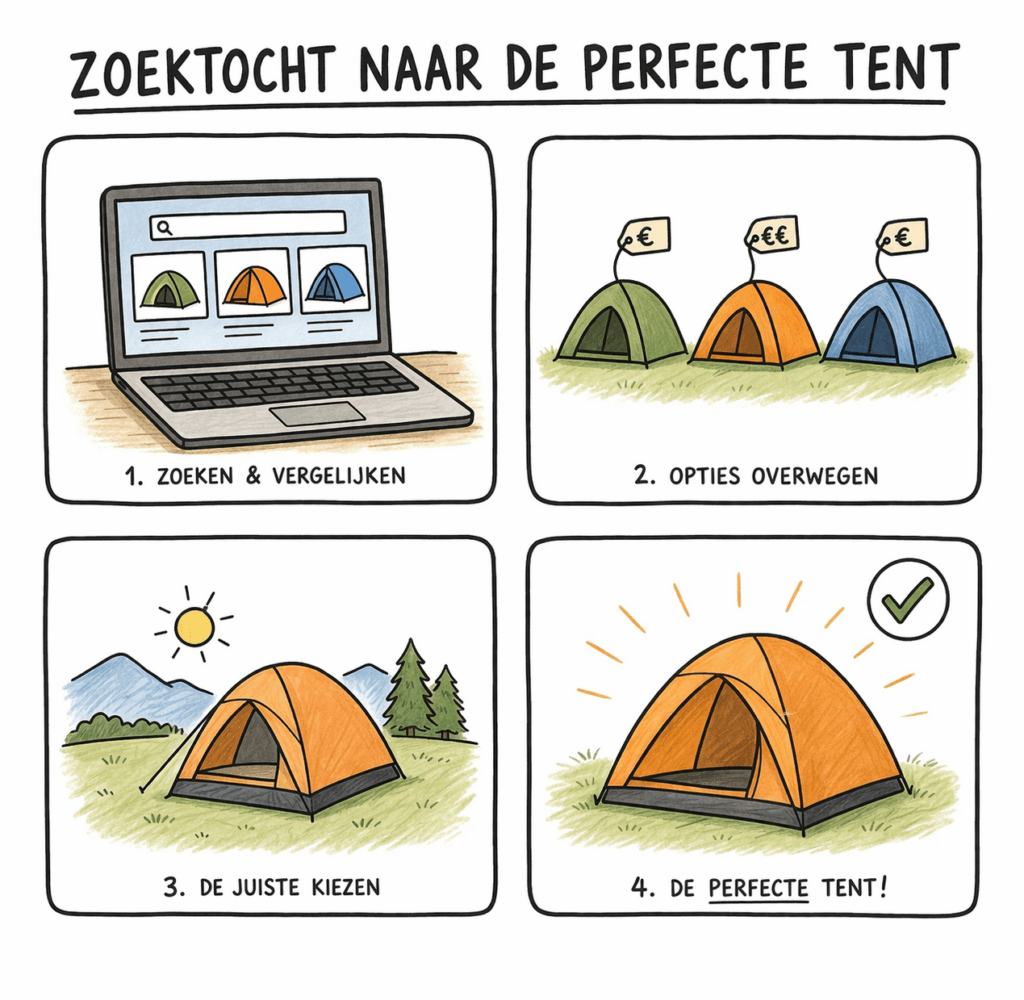
The aforementioned combination led me to look for a different tent. One that would be suitable for both me and my significant other. A so-called unicorn among tents. And that's where the tricky part comes in: what criteria would apply to an unicorn?
My personal wish list
For me, the tent had to meet the following criteria:
- On paper, suitable as a 3-person tent. In other words: 2 plus 1 for our motorcycle gear;
- Lightweight;
- Compact pack size;
- Sufficient space to sit upright;
- Partially to fully freestanding;
- Good price/quality ratio;
- Durable.
Drowning in options
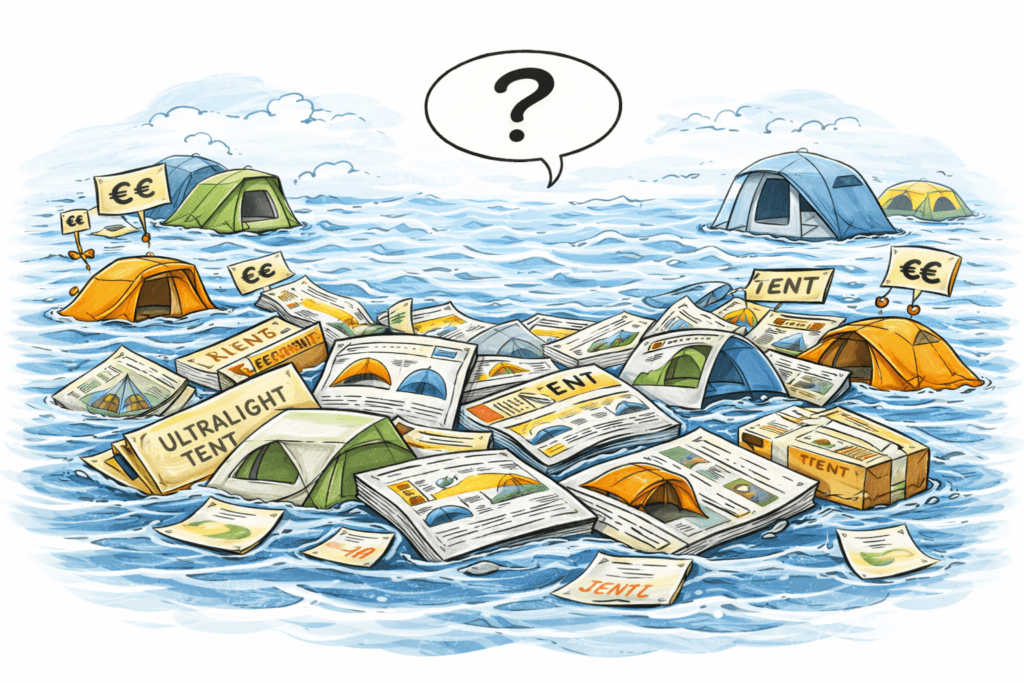
This is where the challenge begins. The tent market is enormous, from extremely cheap to prices I do not dare to even mention. But several of the criteria already provided a good filtering of the tents that might be suitable for what I was looking for.
Dreams vs. Reality
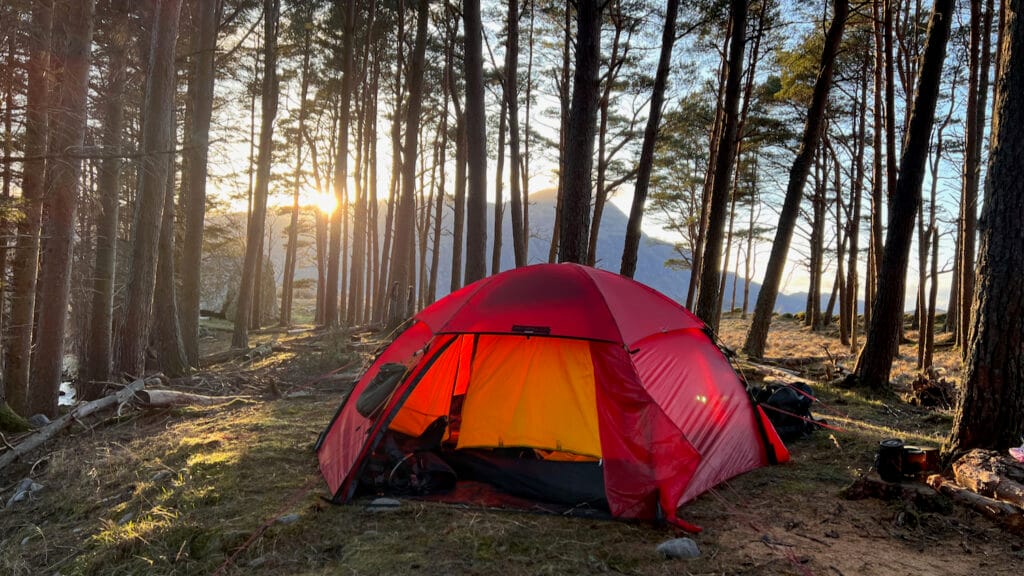
The first criterion that provided a good filter was simply the maximum budget I wanted to use. The Bentleys among lightweight tents are brands like Hilleberg, Fjällräven, Big Agnes, and Barents Outdoors. Just to name a few, they make some of the finest backpacking tents I know. However, these fell well outside the budget I was willing to spend.
Some choices are simple
The next criterion that served as a good filter was whether the tent was partially or fully freestanding. Tunnel tents like my previous Nordisk were immediately ruled out. Only dome tents or similar remained. From there, I started looking at the details.
Finding the right balance and choice
The next criterion I used was weight. The Coleman was over 5 kilos without any extras. The Nordisk was around 2 to 2.5 kilos, including its extra footprint. So my goal was essentially to find the Coleman's spacious comfort, but with a maximum weight of 2.5 kilos.
Using my criteria, I filtered through the vast list of available tents and then made a choice based on further research into the details. Ultimately, a few remained, and one stood out for me personally.

And then there was one left.
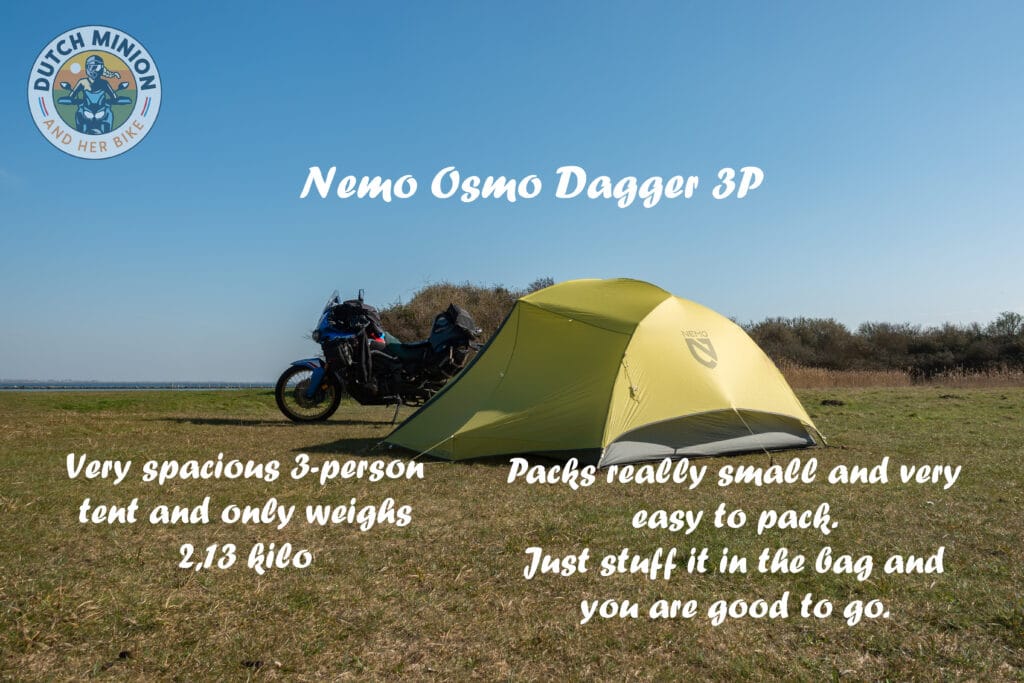
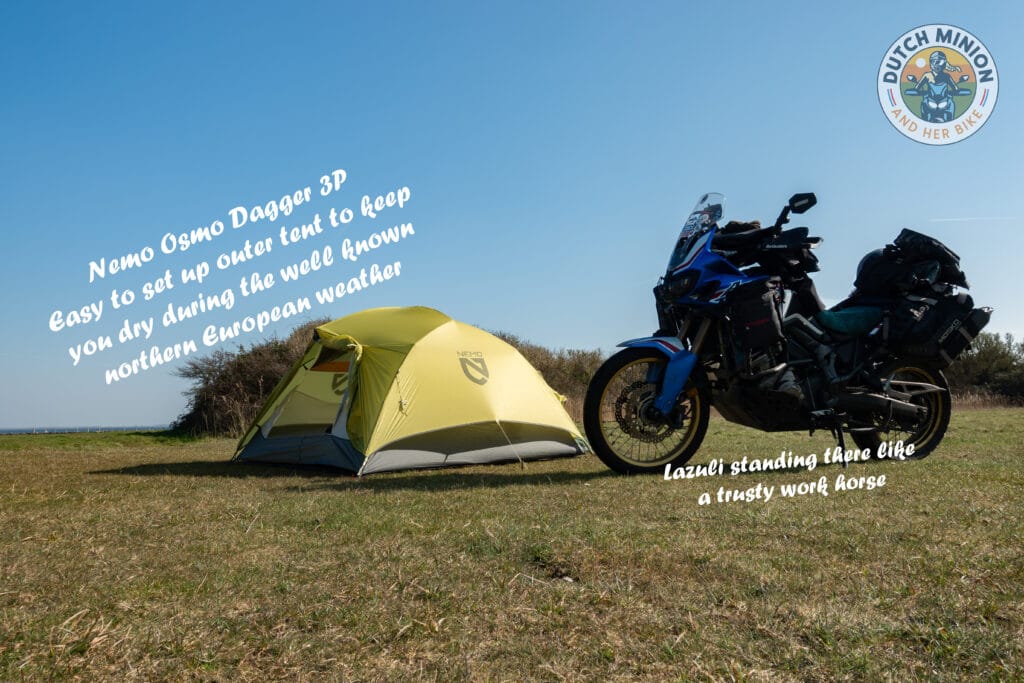
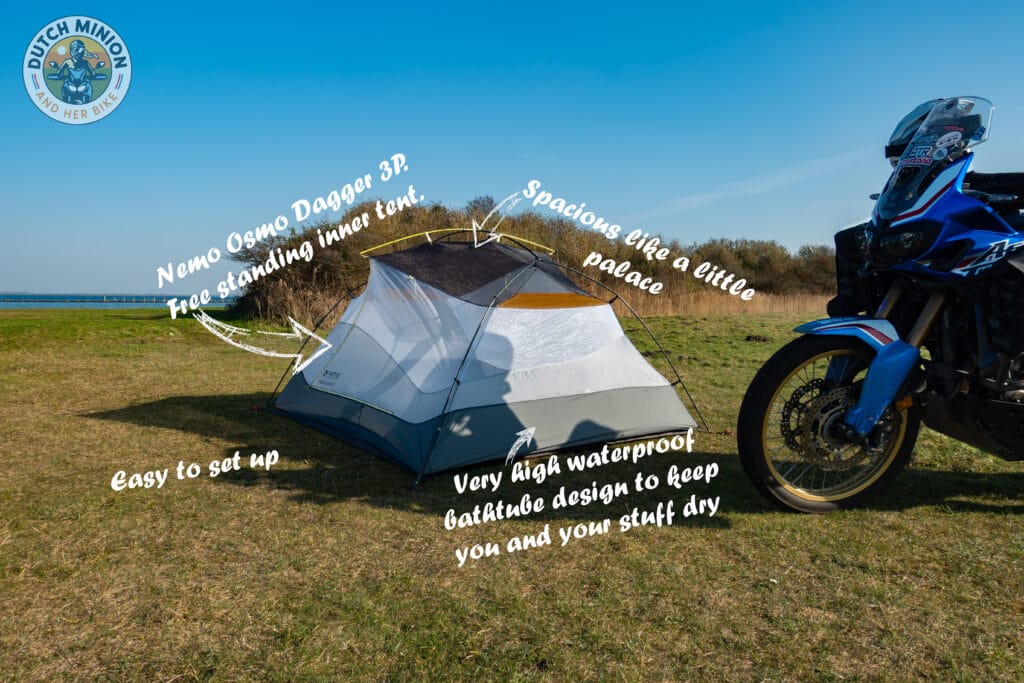
The final choice was the Nemo Osmo Dagger 3P. I actually only found three minor drawbacks to this tent, which I compromised on:
- The floor (known as a bathtub) could use an extra attachment halfway along the widest part to make it really taut all around;
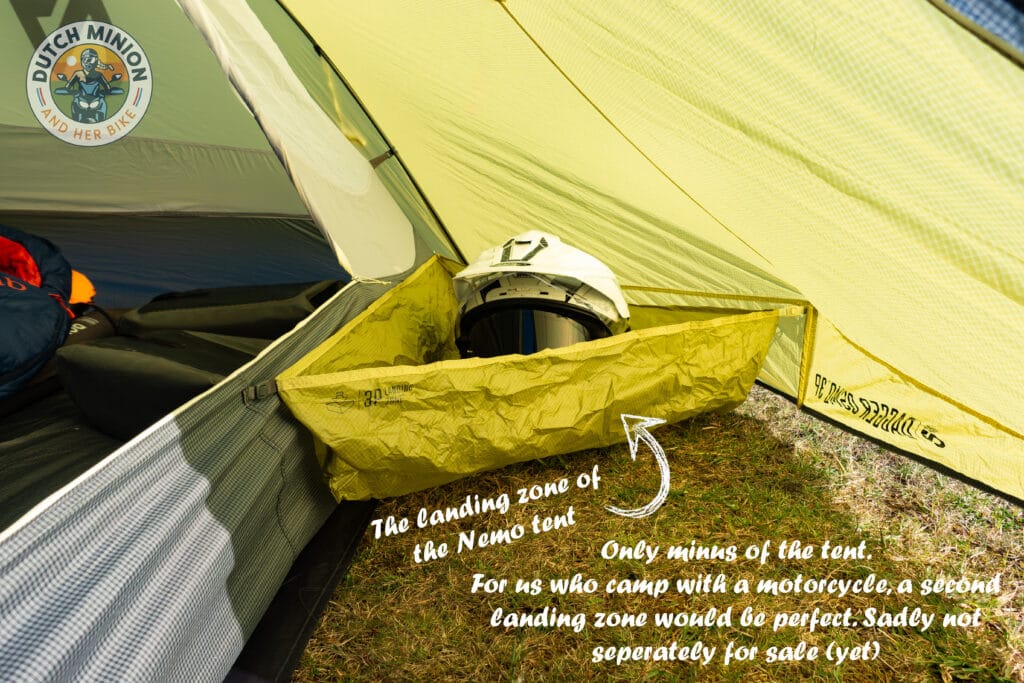
- The tent only comes with one landing zone. A second would be perfect, but unfortunately, it's not available separately;
- When you unzip the outer fabric and it's rained, water drips onto the floor. This is easily remedied by adding an extra tarp over the tent.
Why this tent won me over
But what are the advantages?
- Lightweight and compact. Including the extra footprint, this 3-person tent weighs well under 2.5 kilos. Packing is also very easy. No complicated folding methods, just push it into the bag, grab the tent pole, and you're done.
- Extremely spacious inside. I can easily kneel without touching the top of the inner tent. Even brushing my long hair is no problem. It's like a palace compared to the Nordisk.
- Solid and well-designed. The material feels strong, despite being lightweight. There are also many thoughtful features, such as extra loops for hanging lights or a rope, extra pockets for storing things, etc.
- Value for money. It's certainly not a cheap tent, but for what you pay, I think you get a lot for your money. The tent feels like it wouldn't be out of place among tents in a higher price range.
Not a unicorn, but very close.
This tent isn't exactly a unicorn for motorcycle camping, but in my personal opinion, the Nemo Osmo Dagger 3P comes close, and I hope to enjoy it for many years to come, both alone and with my significant other.
 EN
EN  NL
NL